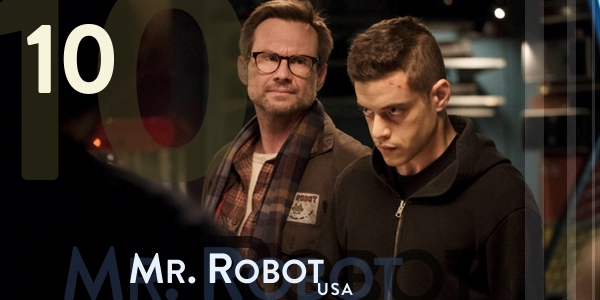
This show certainly came out of nowhere, but did not go unnoticed in its premiere season on USA. One of the most critically acclaimed shows of the year, Mr. Robot is understated, atmospheric, and places an emphasis on a realistic portrayal of hacker culture. It’s also one of a number of shows that delves in a sympathetic and unique way into the realm of mental illness, as our main character deals with anxiety, a drug problem, and other psychological symptoms. Their wink-to-the-camera “homage” of another work (that I leave intentionally vague to avoid spoilers) I didn’t fully buy into, partly because I didn’t like that other work, and partly because I didn’t feel like it served the story all that much. But a superbly crafted series with great direction and a compelling story.

Like Inside Amy Schumer, I also binged both seasons early this year, and felt that Season 2 carried on the momentum it had gained at the end of the first with a distinctive voice and great comic timing. The central relationship between Ilana and Abbi is funny, touching, and at times confusing (in a good way.) Hannibal Buress makes me crack up every time. The “pegging” episode was one of the most perfectly-crafted half-hours of comedy in recent memory.
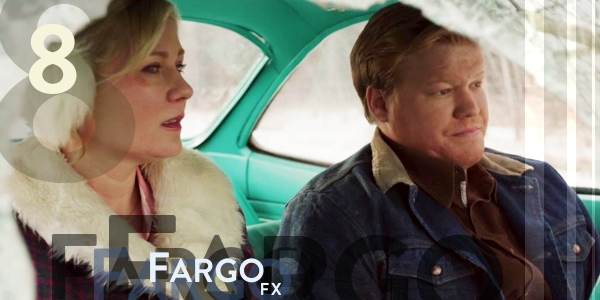
My biggest gripe with Season 1 was that it didn’t stray far enough from the original source material and build its own identity. Season 2, which takes place 30 years earlier, manages to keep the same quirky/dark feel without relying on the same archetypes and story beats. In fact, it would’ve been difficult to make a show more distinctive and unique than Fargo Season 2. It took a number of established tropes of the original film and first season and even the genre as a whole, and twists them in all sorts of new and unusual ways. The bizarre but amazing deus ex machina toward the end of the season was completely out of left field and somehow completely appropriate. The finale was both touching and unexpected yet expected. Patrick Wilson made a fantastic young Keith Carradine. The cast was all pretty fantastic, but the highlight was a slightly delusional housewife searching for meaning, played by a wonderful Kirsten Dunst. I was turned off a bit by the mob war stuff, which did serve more as a backdrop putting things into motion for the more interesting characters, but still went on a bit too long for my taste.
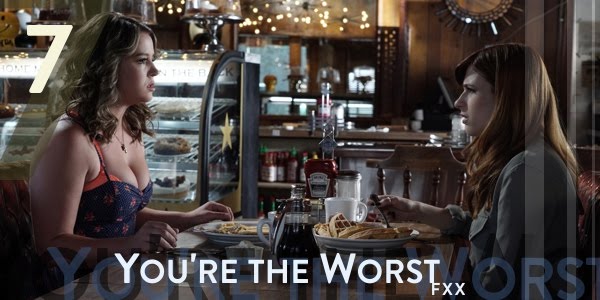
While still nearly as funny as the first season, You’re the Worst pushed new storytelling ground and took some real risks this season, that really gave it more weight. I really don’t want to say too much more about it at risk of revealing too much. But we got to dig deeper into all of the characters and their particular brand of problems. It was good seeing Edgar break off and find something for himself, because he is the least worst of them all. Aya Cash was fantastic in a turn for Gretchen. Lindsay is the worst and the best. The most bold and daring comedy this year.

Not sure what profound things I can say about this season. All the strengths of Season 1 were taken to a new level in Season 2. Highly imaginative concepts, a pointed effort to avoid expected formula and shatter expectations. But in typical Harmon fashion, Rick and Morty never (well, hardly ever) does insane for insane’s sake. It’s always to serve the characters. The addition of big sister Summer (Spencer Grammer) to the majority of the galaxy-faring adventures was a welcome one, not only for a better gender balance, but also for adding a fun new perspective and story possibilities. But mostly, Season 2 was just freaking hilarious.

Hey, another show I didn’t watch in 2014, but made it onto the 2015 list! Season 1 floundered quite a bit figuring out what direction it wanted to go in, but the last three episodes of that season were quite good, making me optimistic for a strong season 2. It was even better that I could have… optimisted? Season 2 flipped the script, and made it about the women. The nerd boy fantasy girl and the nagging housewife from Season 1 were now running the show, and we follow them running a startup tech company. Kerri Bishé, who I don’t think was even in the opening credits for Season 1, was now arguably the main character, and crushed it (to borrow a term I kinda loathe). The two male “entrepreneurs” from Season 1 went on a journey to discover their place in a world that turns out, didn’t really need them. I’m oversimplifying a tad; they still had plenty of screen time, but the challenges that the characters faced this season were substantially more compelling, and had me totally bought in all season long. Best feminist computer series in recent memory.

Well, in what turned out to be the final season, Defiance went out on an exceptionally strong note. The ramifications of the end of Season 2 were largely emotional ones, that added great new and interesting conflict between Nolan and Irisa. In addition, we’re given the best villain on the series to date, who raises the stakes by offing some people I’d been hoping would get offed for a while. His arrival also sets into motion some fantastic morally questionable choices by everyone’s favorite morally questionable Tarr family, and ultimately one of the best-constructed hours of TV. Basically, this season, the chaff was cut, and the strongest characters and actors were given great conflicts to deal with, resulting in some really really good scenes and moments and episodes. And while I would’ve liked to see what was next, it ended in a way that was pretty satisfying.
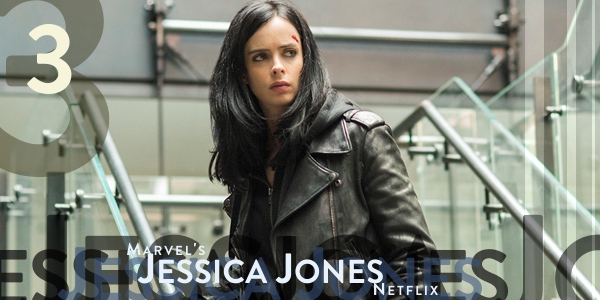
Speaking of feminist shows in nerd genres… Jessica Jones is the cursing, drinking, screwing P.I. that would make Jack Nicholson in Chinatown envious. I really really don’t want to say too much here, because part of the joy for me of the series was knowing next to nothing about the characters going in. The first episode feels like a straight detective show with a few odd things going on, and you try to put together the clues as it slow burns over the first 6 or 7 episodes before you understand the full history of it all. So, I’ll just say, trust me, this is not the Marvel superhero show you’re used to. And David Tennant is in it. And he’s great. And forget about the B– in Apt 23. Though James Van Der Beek plays himself in this as well. (Not really.)
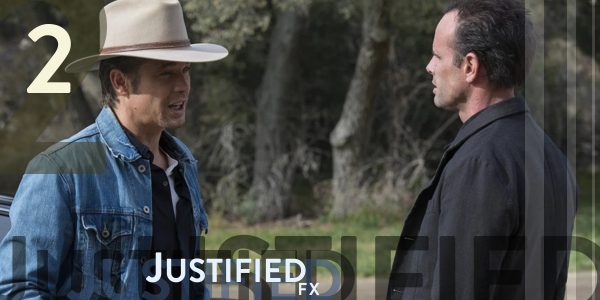
It’s a pretty rare thing these days for a show to go out on its own terms; it’s even rarer for such a show to go out at its creative peak. Justified is that pink unicorn, ending its strong 6-season run with arguably its best season yet. It turns out Justified was like the original Star Trek movies with its even-number pattern, so it was a smart move to produce an even number of seasons. While the weaker third and fifth seasons began to choke on their intricate web of characters, feuds, and extended history, the final season wisely kept a tighter focus on the central characters, only adding more into the mix if it was going to serve that story, and not bog it down. What resulted was a finely crafted arc that acknowledged the long history of the characters without relying on that history to populate an infinite number of betrayals and loyalties. Which isn’t to say that betrayal and loyalty were not strong themes this season. But each such decision came with weight and clear reasons, and ultimately felt earned. In fact, my favorite choice they made this season was a pivotal twist that was both completely unexpected yet perfect for that character. (And by twist, I don’t mean the cheap Shymalan or Fight Club variety, but the kind that pulls the plot forward in a completely unexpected direction.) Top it off with a finale just about as perfectly appropriate for that show as any I’ve seen, and you’ve got one of the finest final seasons (or any other seasons) of all time.
As I finish gushing about the near-perfect final season of Justified, it is of some note that it had been my aim for about eleven months to crown it as my #1 of the year. It was awesome to see it go out on such a high note, and I was thrilled and excited to be able to give a proper send-off to some of my all-time favorite characters with a well-deserved top spot in 2015.
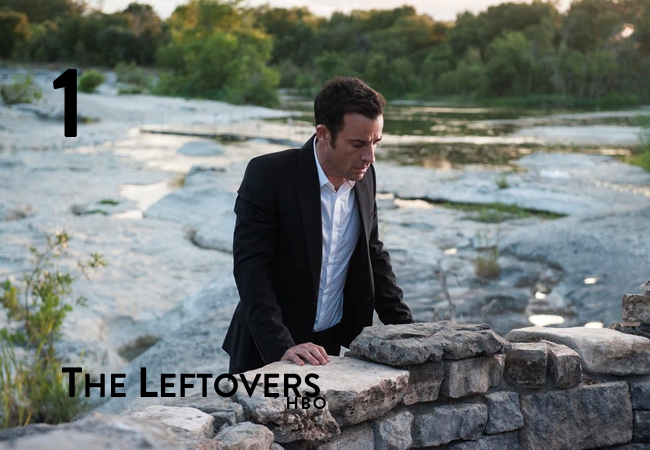
It wasn’t until I re-watched The Leftovers with my family over the break that it kinda dawned on me what a special, unusual, and meaningful season of TV that was. It was a meaty beast that begged for making connections, and unpacking meaning from its dense imagery for days and weeks after.
Apology section
These shows were on my list, probably would have been good, but didn’t get prioritized for viewing (to completion) this year. In italics are the shows that were on last year’s Top 20.
Narcos, The Man in the High Castle, Banshee, Comedy Bang Bang, Nurse Jackie, Outlander, Orange is the New Black, The Blacklist, Orphan Black, Broadchurch, W/ Bob & David
That’s it for this year. Hope you found my flawed analyses interesting. Feel free to comment with your own contrary opinions or additional insights. I like hearing what other people got out of TV this year, which will surely be different than my own experiences. What shows added appreciably to your 2015?
Happy New TV Year!





 Seavey TV